On April 21, West China Hospital of Sichuan University (WCHSCU) and Naparat Rajathanee Hospital in Thailand collaboratively completed the first China-Thailand remote robot-assisted hepatobiliary surgery. The remote procedure was jointly conducted by the team led by Professor Wu Hong, Vice President of WCHSCU and Director of the Liver Transplant Center, and the team led by Dr. Naraporn Suntharachai, Director of General Surgery at Naparat Rajathanee Hospital. The two teams achieved real-time, precise operation via 5G technology. The successful completion of this surgery is a vivid demonstration of the outcomes of WCHSCU's Belt & Road Minimally Invasive Liver Surgery Training Course. It also marks the official entry of China-Thailand medical cooperation into a "new era of remote robotic surgery."
The patient, a 51-year-old Thai woman, had suffered from persistent right upper abdominal pain due to biliary tract stones, compounded by hypertension, diabetes and other underlying conditions, rendering her case relatively complex. After comprehensive evaluation by both teams, the decision was made to adopt a remote robotic surgical approach.
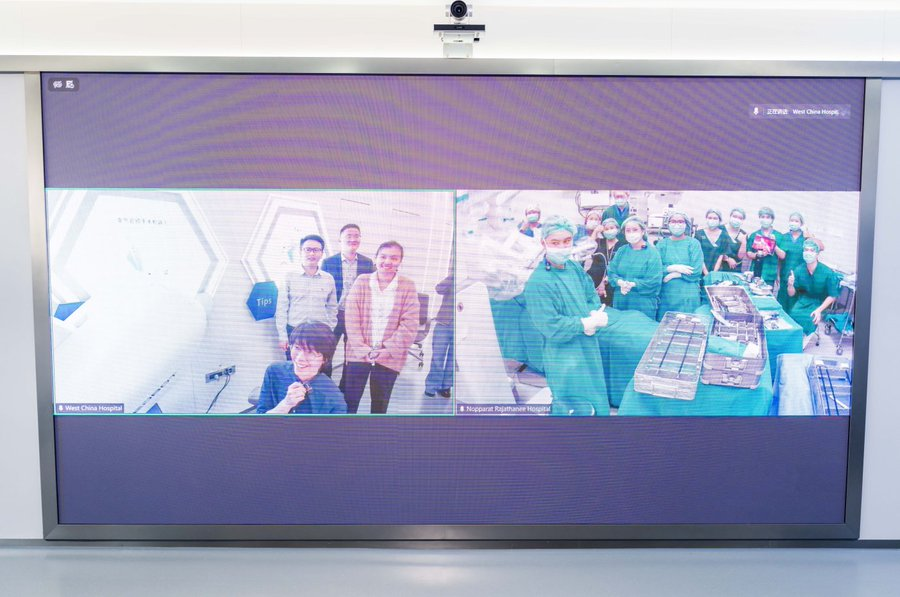
Remote robotic surgery requires extremely high standards of equipment stability, real-time data transmission, and team coordination. Cross-border surgery also presents additional challenges, such as language barriers, time zone differences, and network latency. In this procedure, the 5G network provided stable support throughout, ensuring high-definition, smooth video transmission and millisecond-level command response, with no lag or delay. The patient's vital signs remained stable, and the surgery was successfully completed.
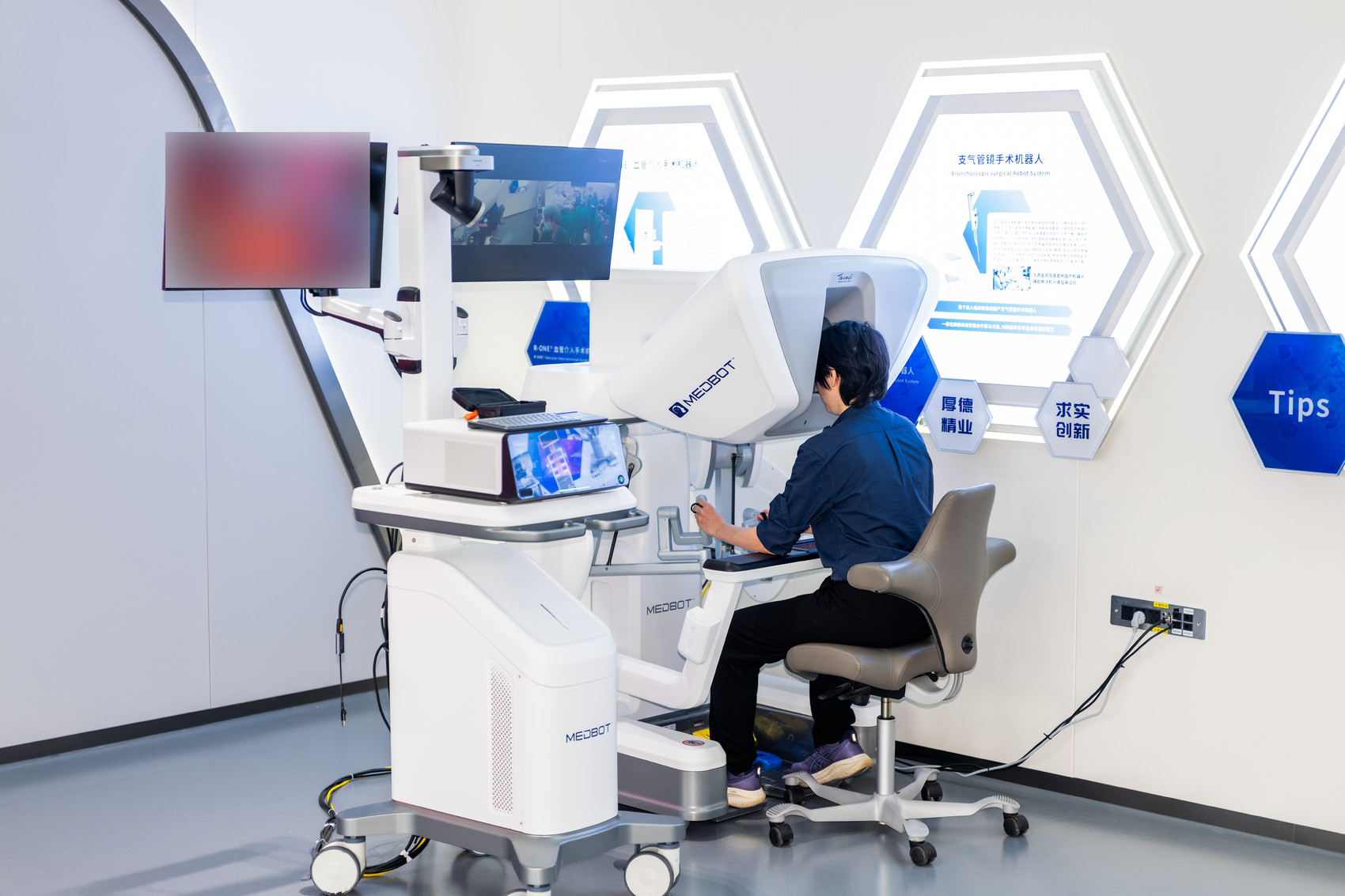
For a long time, the distribution of medical resources in Southeast Asia has been uneven, and patients with complex conditions who travel across borders for treatment have faced high costs, long waiting times, and other difficulties. In recent years, WCHSCU has actively responded to the Belt and Road Initiative, deepening cooperation with ASEAN countries in areas such as medical technology, talent training, and telemedicine, and promoting cross-border sharing of high-quality medical resources. The successful completion of this first China-Thailand remote robot-assisted cholecystectomy not only fully validates the applicability of Chinese robotic surgical systems in complex, cross-border medical settings but also offers an innovative pathway for patients in Southeast Asia: access to high-level medical care without leaving their home country.
In the future, WCHSCU will further expand the applicable disease scope and clinical scenarios for remote robotic surgery, deepen medical collaboration with Thailand and other Southeast Asian countries, continue to promote the global reach of China's advanced medical technologies, and facilitate the coordinated advancement of regional medical capabilities.
Check more reports from Chinese and
Thailand media:
Xinhua Net:
https://english.news.cn/20260422/a3e8a8cca4e84cd192f00bc56f7897f3/c.html
Bangkok Post:
https://www.bangkokpost.com/thailand/general/3241218/thailandchina-robotic-surgery-a-first